1.webp)
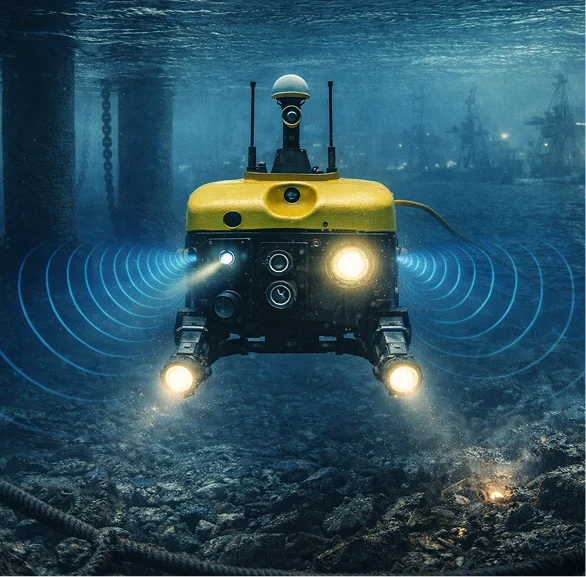
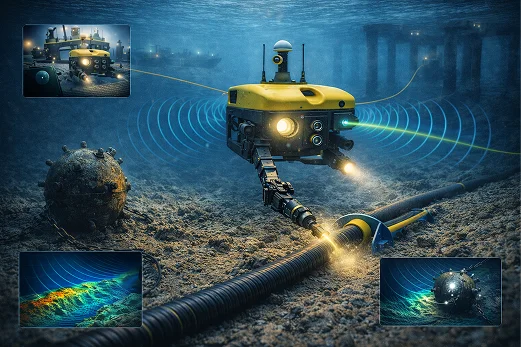
Remotely Operated Vehicles (ROVs) provide continuous, real-time underwater visibility for harbour security, seabed inspection, mine countermeasures, and subsea infrastructure protection. Equipped with high-resolution cameras, sonar manipulators, and specialized sensors, ROVs enable precise detection, identification, and intervention—ensuring uninterrupted subsurface awareness while eliminating risk to personnel.
Advanced ROV‑based surveillance systems overcome these limitations by enabling persistent, remote underwater operations across extended durations. Capable of operating in confined harbours, deep waters, and high‑risk environments, ROVs support continuous inspection, threat verification, and intervention without disrupting ongoing naval or port activities.
Unmanned maritime systems are transforming how nations secure sea lanes, project power, and respond to emerging threats. By removing human operators
from high-risk environments, these platforms deliver persistent surveillance, rapid response, and precision mission
execution across vast ocean regions.
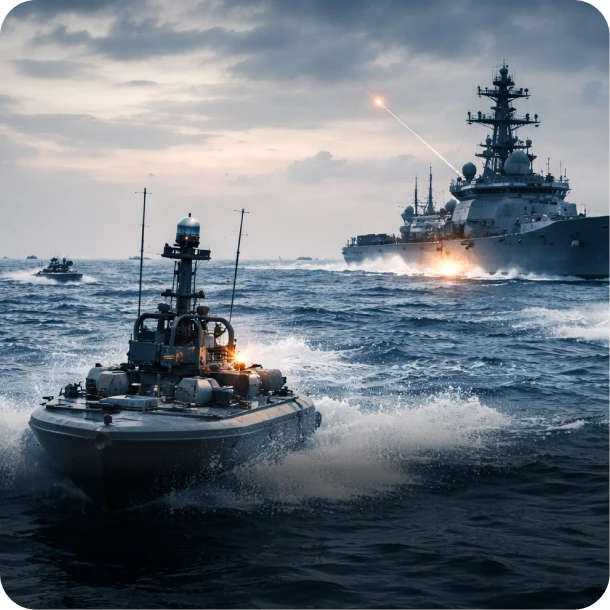
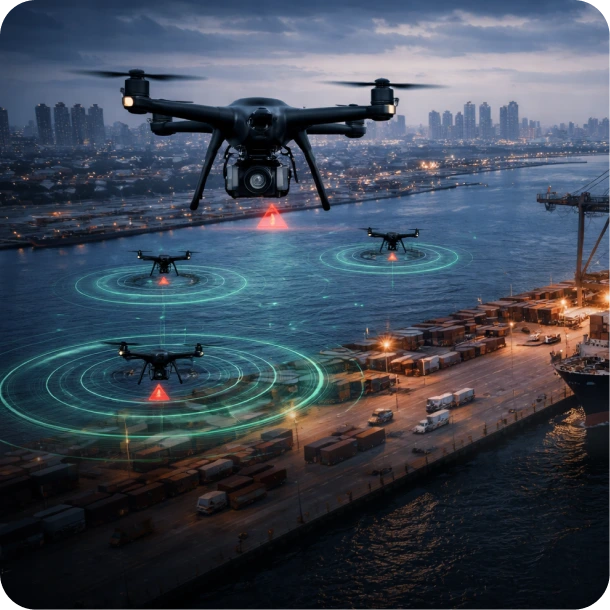
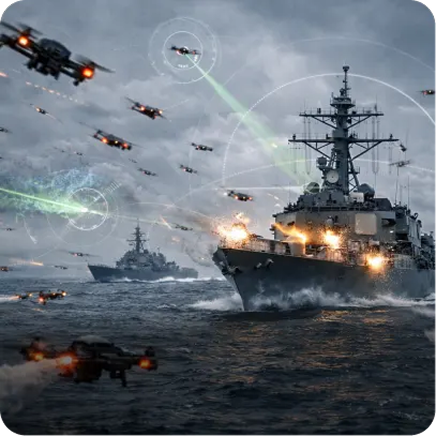
Remotely Operated Vehicles (ROVs) deliver continuous, high-precision subsurface awareness through a centrally controlled, mission-adaptable operational architecture. Designed for harbours, seabeds, offshore infrastructure, and deep-water environments, ROVs enable safe and reliable underwater operations where human access is limited or hazardous.
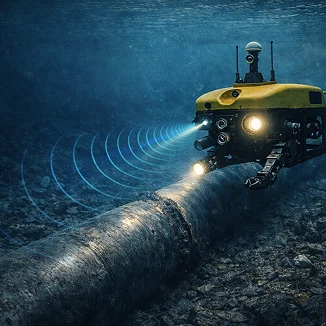
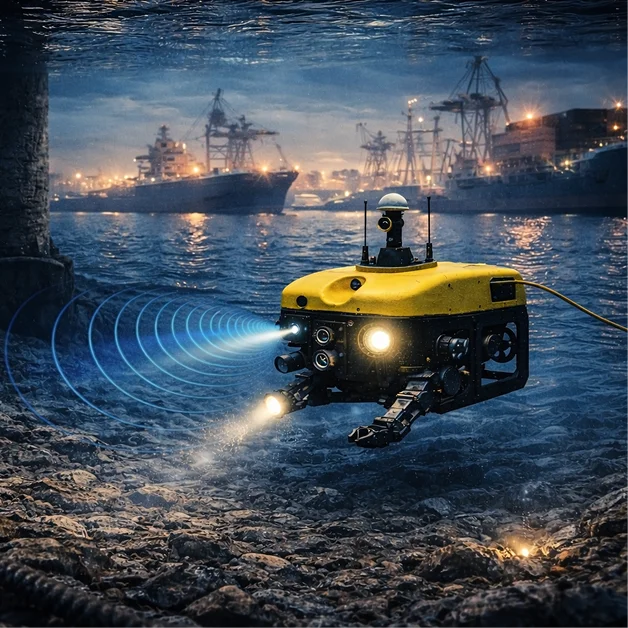
Remotely Operated Vehicles (ROVs) provide precise, remotely controlled underwater awareness and intervention, enhancing maritime security and response while eliminating human risk.

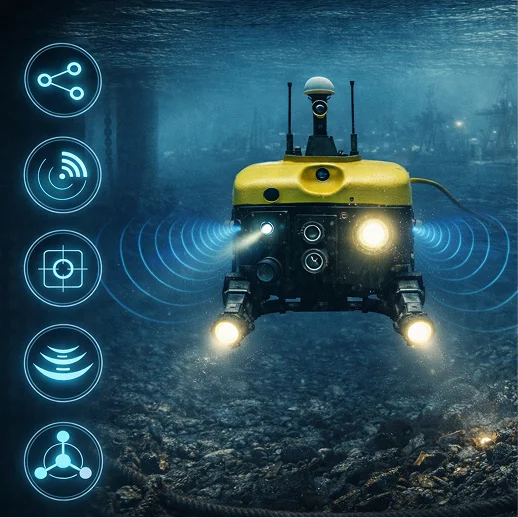
Precision control enables safe ROV operation in complex underwater environments.

Cameras and sonar provide real-time underwater threat awareness.

Continuous inspection protects ports, hulls, and subsea assets.

Centralized, AI-driven command layer that synchronizes detection, decision-making, and countermeasures across all deployed modules and platforms.
From harbour security and mine countermeasures to pipeline inspection and special underwater missions, ROVs serve as a force-multiplying capability, enhancing maritime readiness while ensuring safe, accurate, and extended subsurface operations.
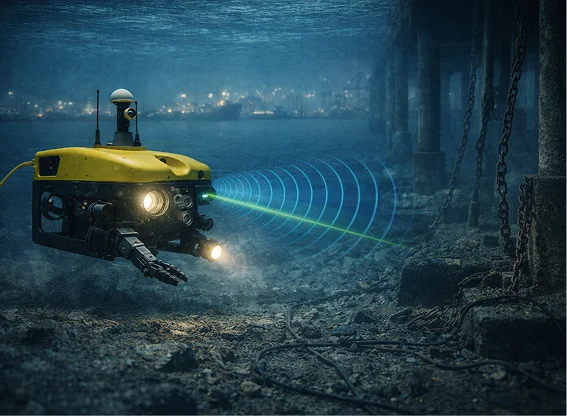
Continuous underwater monitoring to detect intrusions and suspicious activity without diver risk.
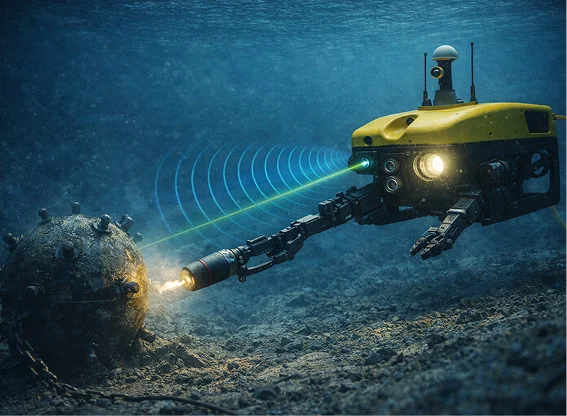
Safe identification and neutralization of underwater mines and unexploded ordnance.
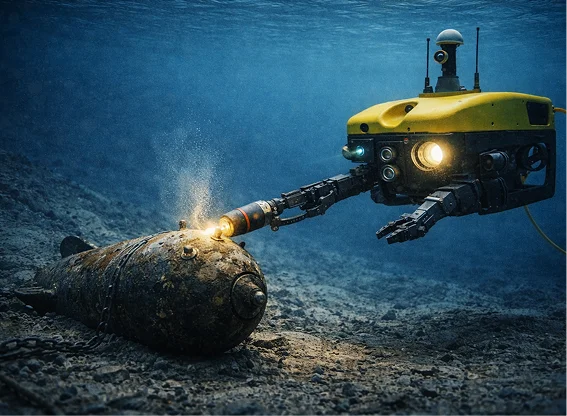
Remote handling and disposal of hazardous underwater explosives.
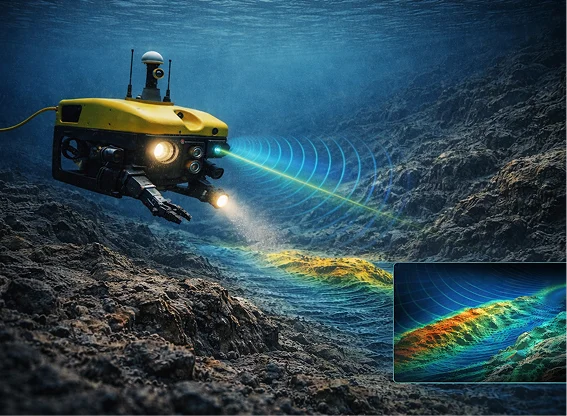
High-resolution seabed mapping and environmental data collection.
Powered by advanced tethered control, high-resolution imaging, sonar systems, and adaptive mission tooling, Remotely Operated Vehicles (ROVs) deliver continuous underwater situational awareness across complex maritime environments. Operating from surface vessels or shore-based control stations, ROVs maintain real-time visibility and precision control in depths and conditions unsafe for human divers.